U-M GPT & ITS AI Services
UX Design · Interface Design · Web Design
- Client
- UMSI IT Services
- Year
- 2025
- Role
- UX Designer
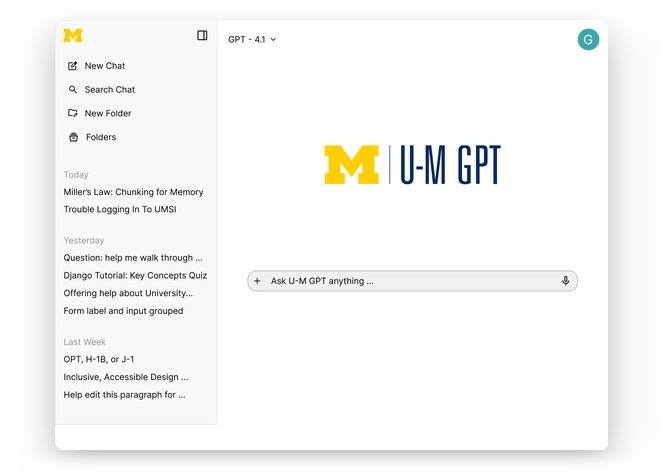
U-M GPT is the University of Michigan’s generative AI platform, providing students, faculty, and researchers with access to a range of AI tools. As part of a semester-long design project, I explored how its interface could be improved to create a more cohesive, accessible, and intuitive experience for the university community.
The project focused on rethinking the platform’s visual hierarchy, navigation, and conversation management, while introducing more flexible ways for users to organize and personalize their workspace.
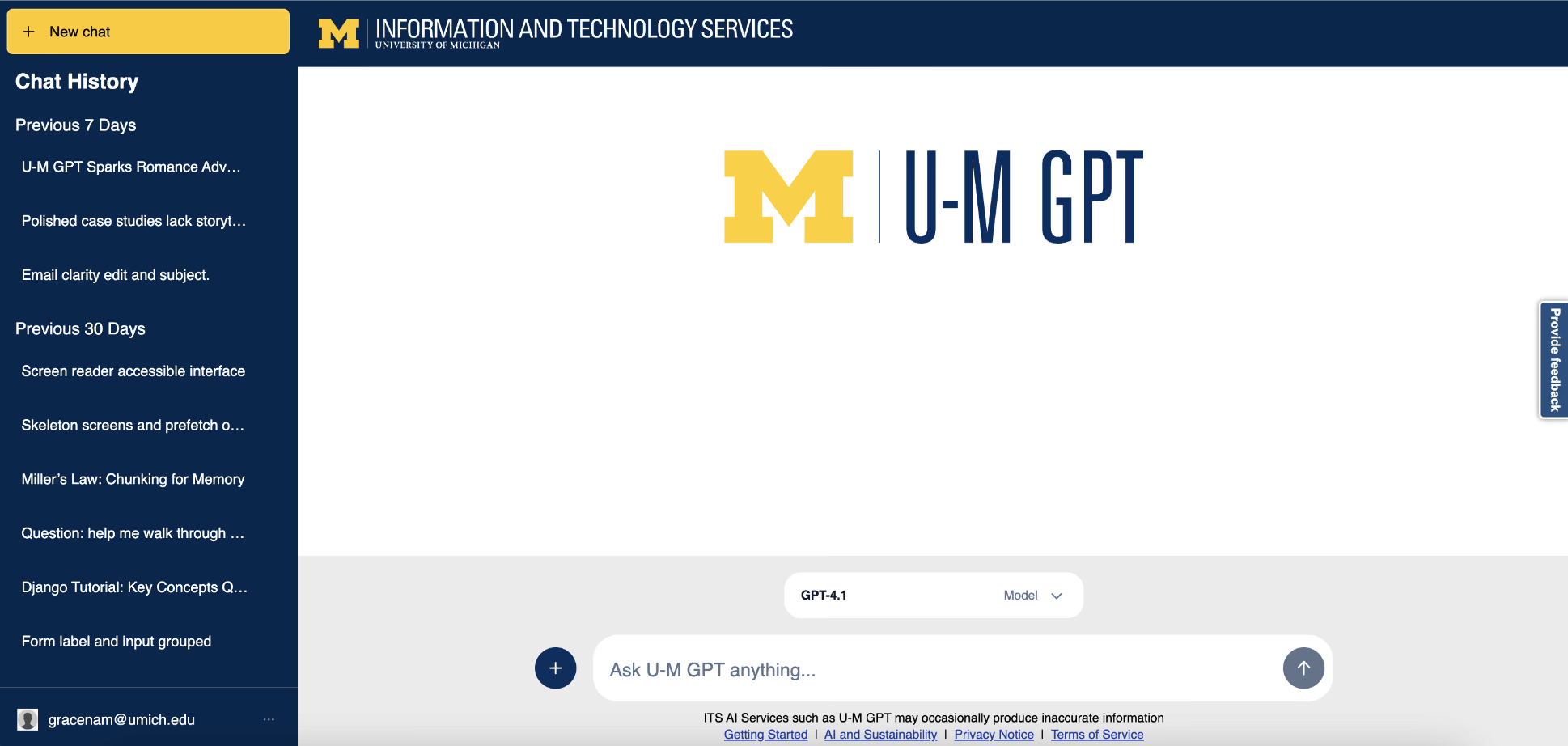
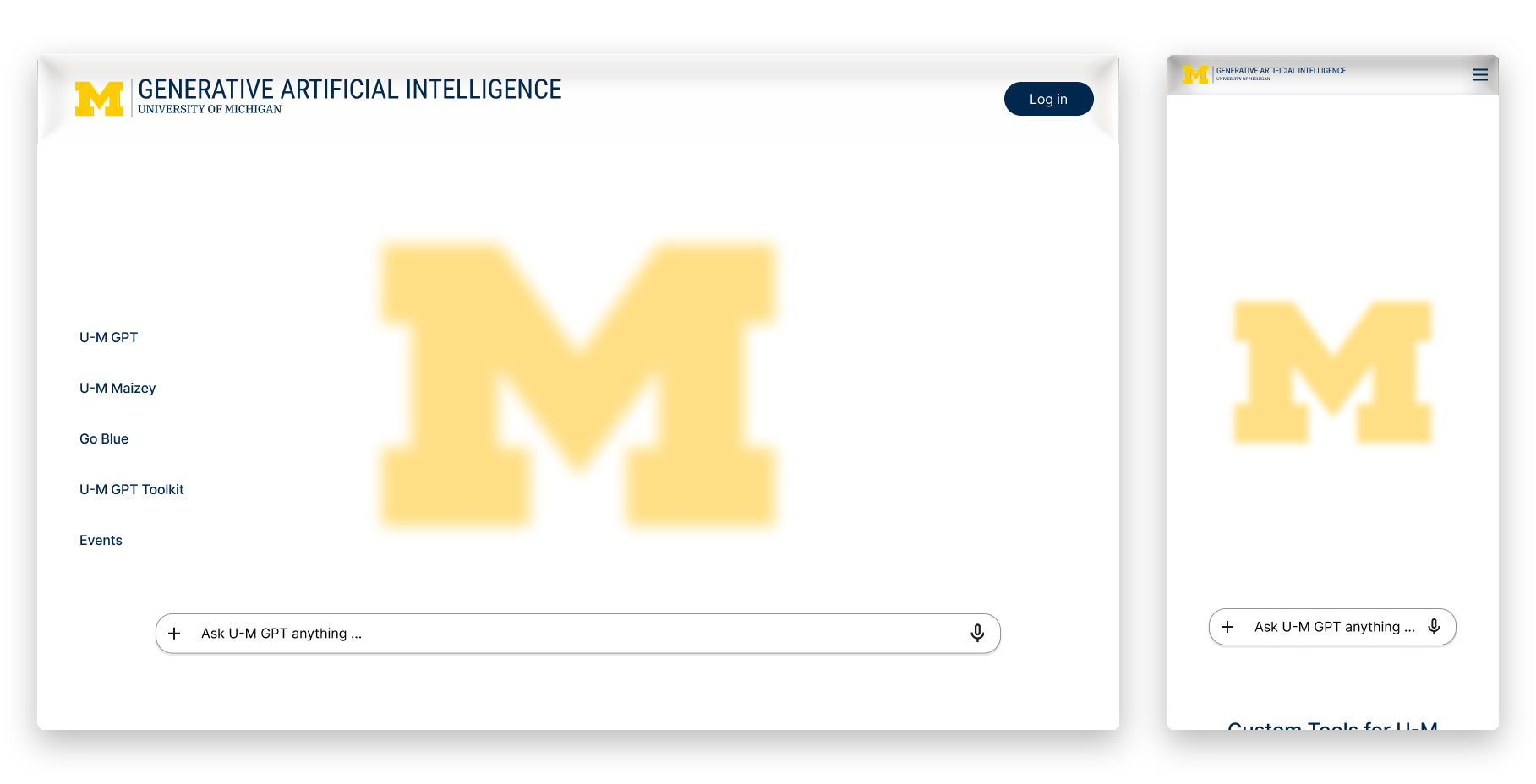
*Original U-M GPT visuals
The original U-M GPT experience presented several usability and visual challenges. A cluttered layout, inconsistent spacing, and competing colour treatments made the interface difficult to navigate and lacked a clear visual hierarchy. Conversation management was also limited, making it harder for users to organize and return to their work.
The redesign focused on creating a more structured and approachable experience, with an emphasis on clarity, flexibility, and efficient access to frequently used content.
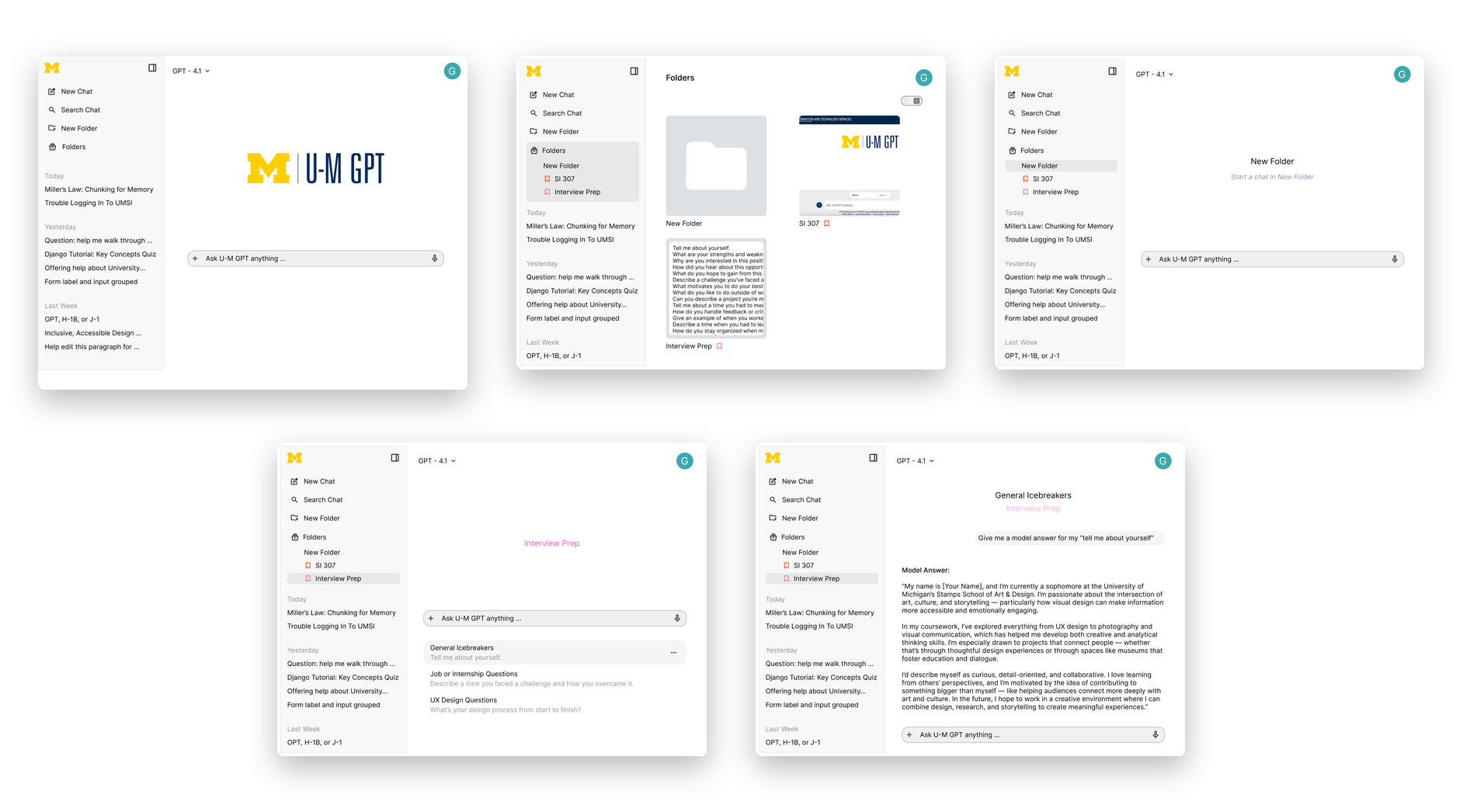
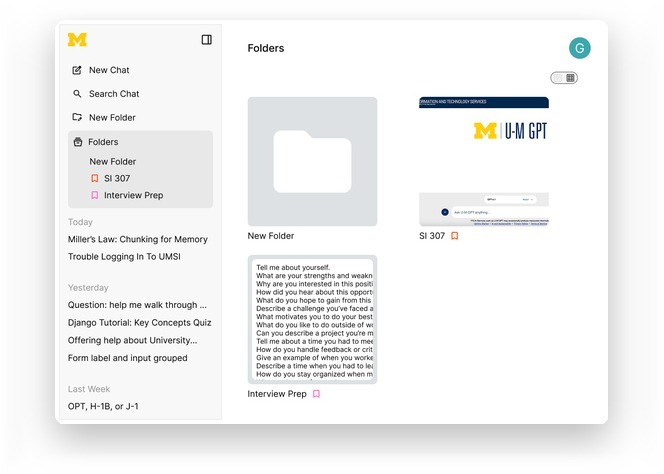
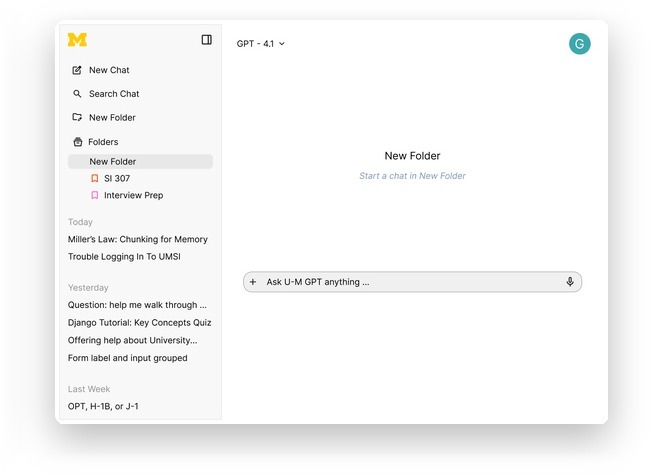
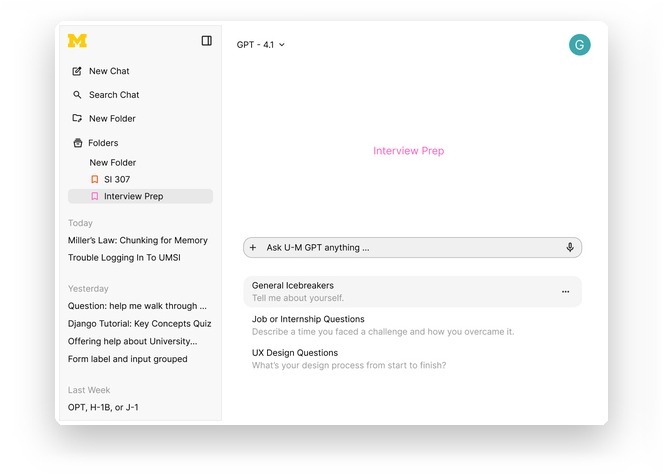
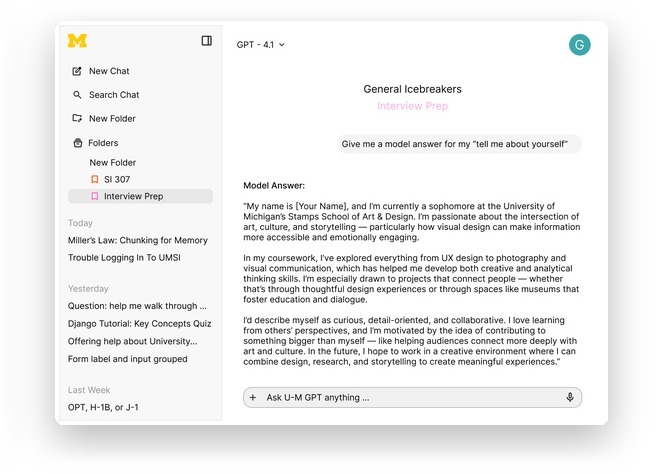
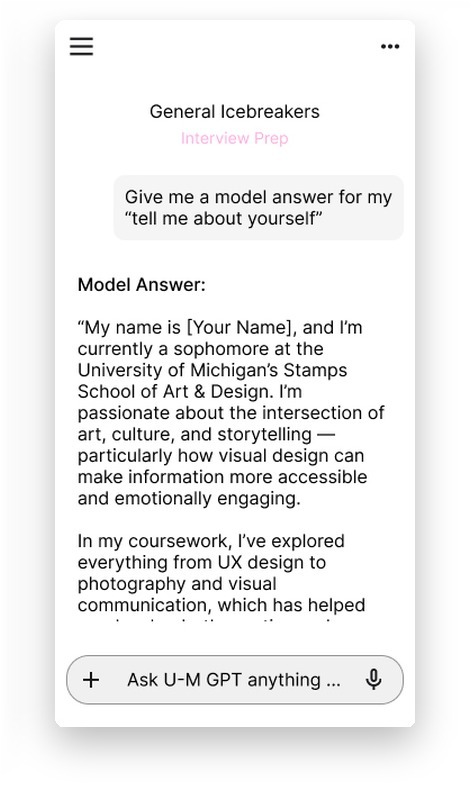
A central direction of the redesign was to make conversations and prompts easier to manage. Search functionality allows users to locate existing content, while folder-based organization provides a clearer structure for grouping related conversations and resources.
Preview information was introduced across conversations, prompts, and folders, helping users identify content before opening it. Together, these features create a more organized workspace and reduce the effort required to find and revisit previous work.
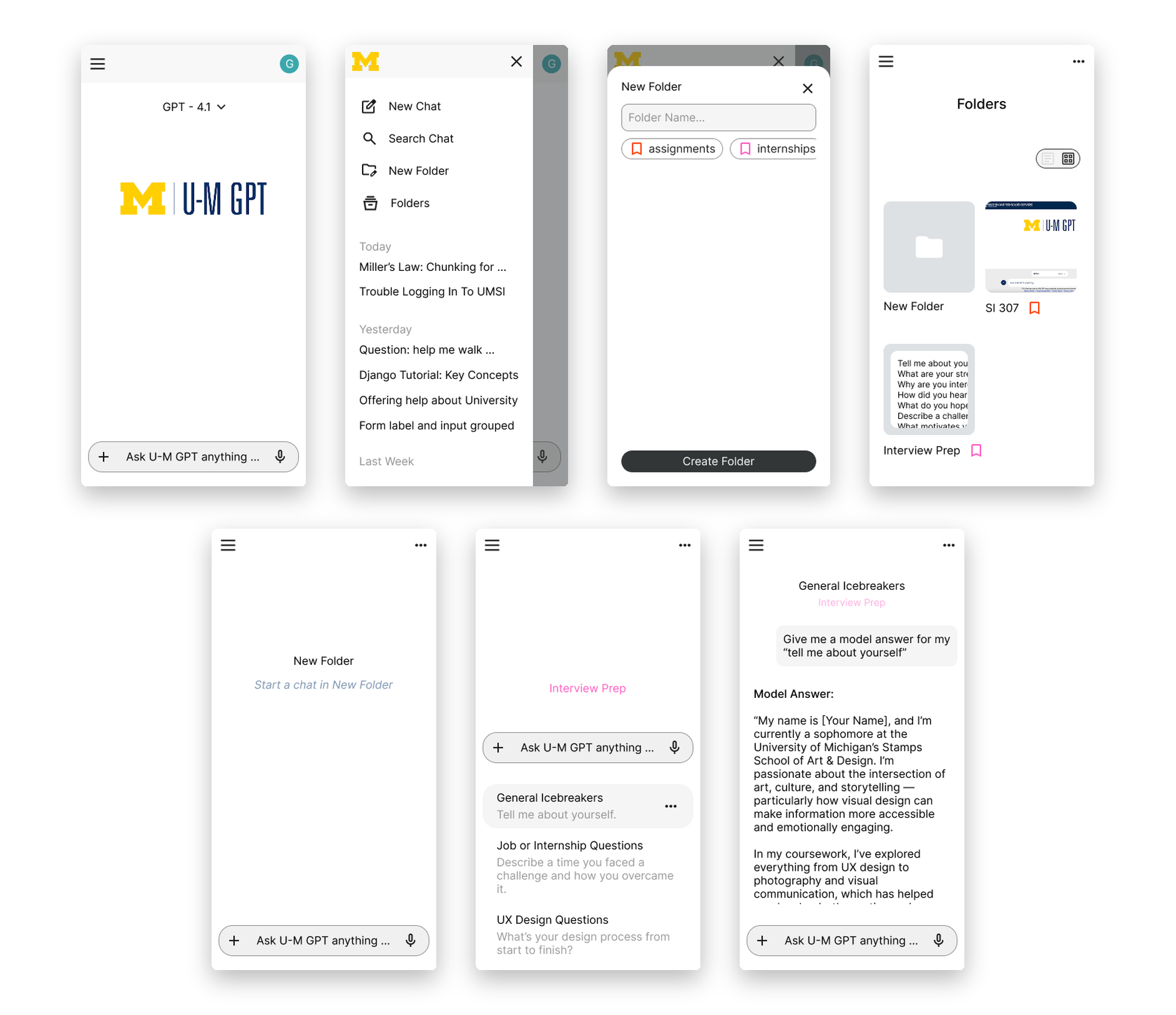
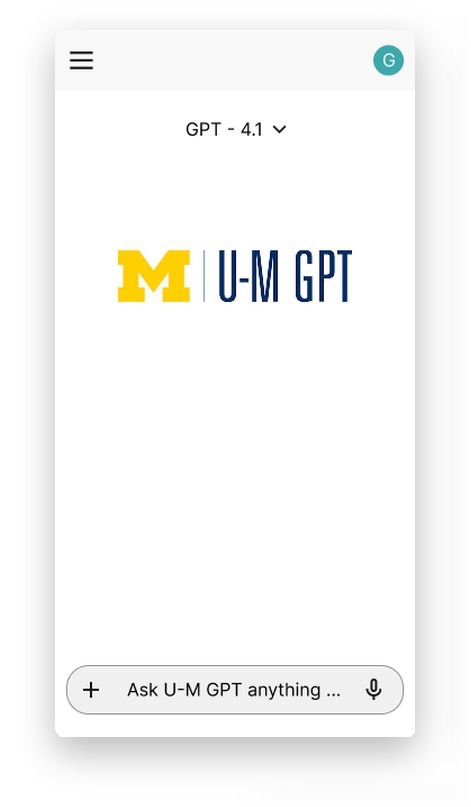
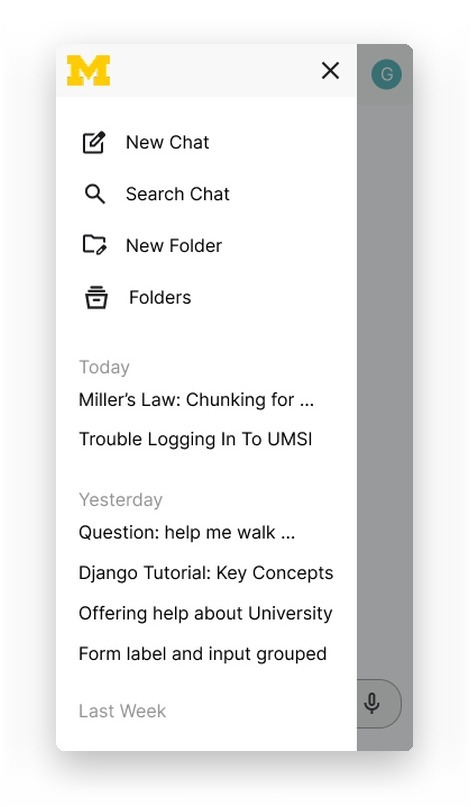
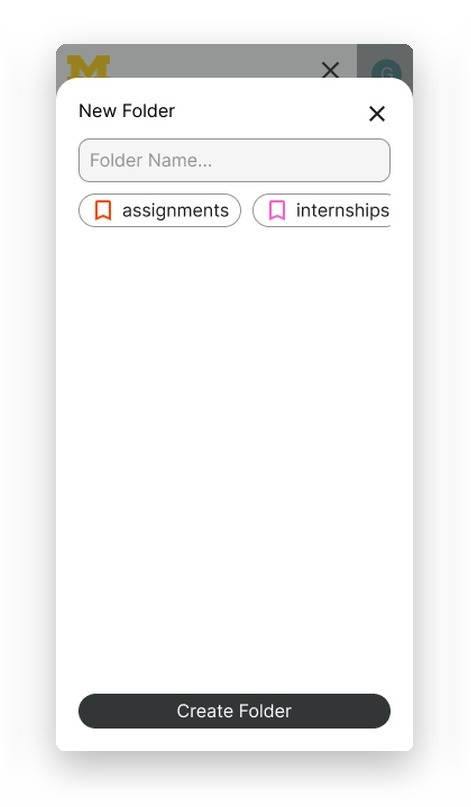
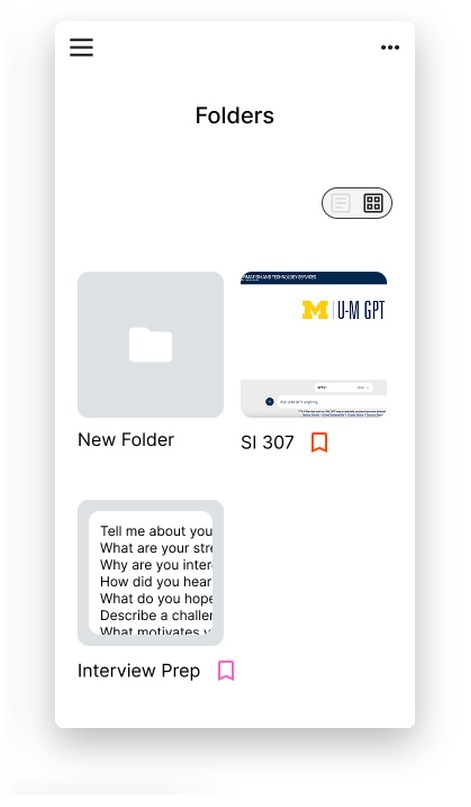
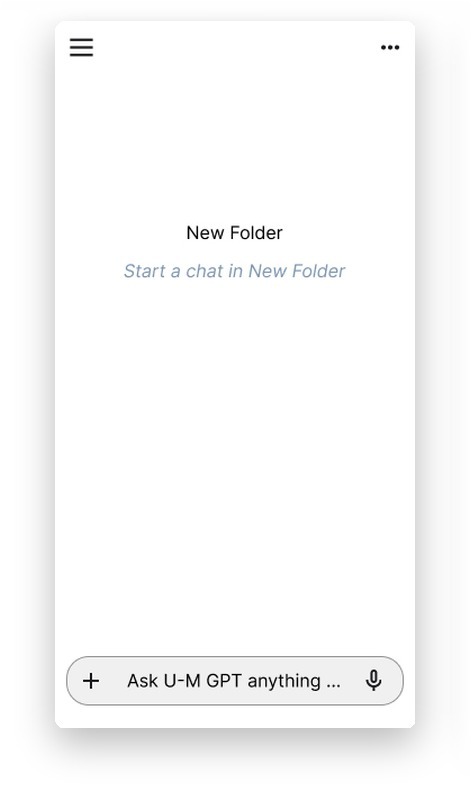
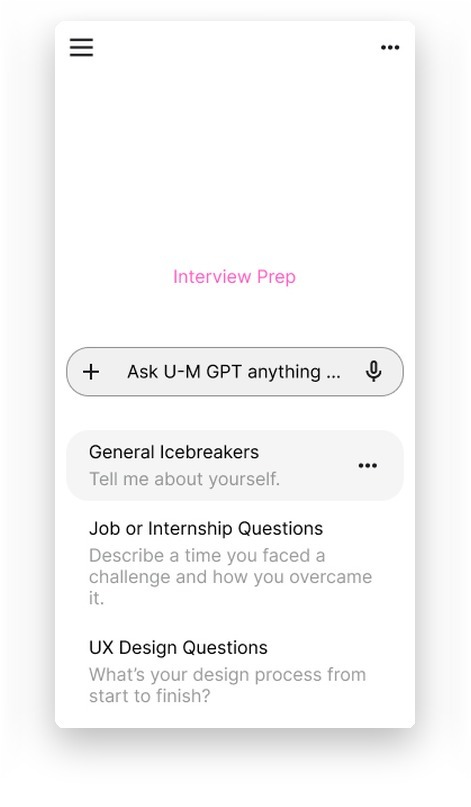
The redesign also introduces greater flexibility in how users organize and view their workspace. Alternative list and grid layouts accommodate different preferences, while custom labels, cover images, and colour coding help users distinguish between projects and content.
These options give users more control over their environment while maintaining a consistent underlying interface.
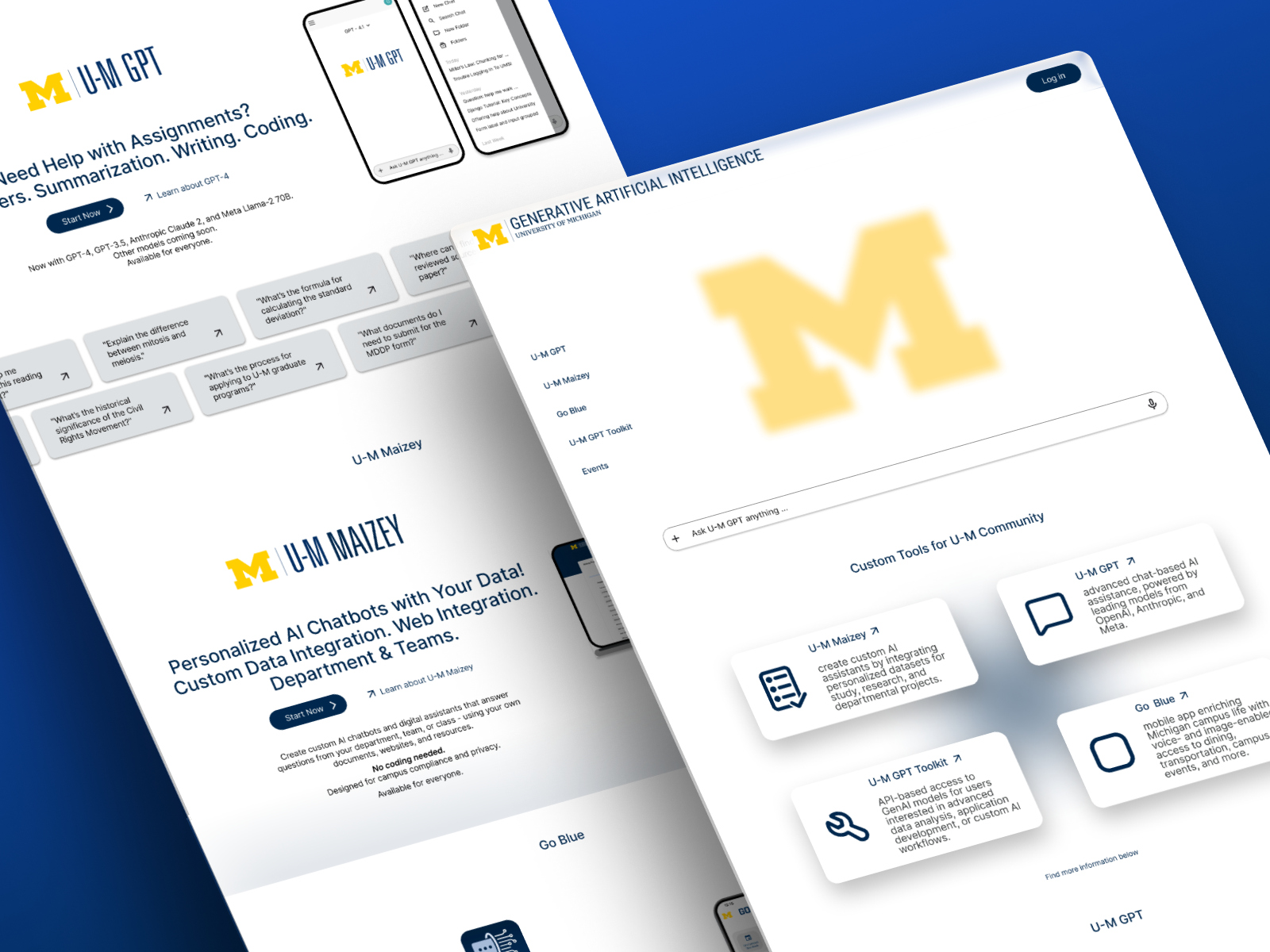
Alongside the platform redesign, I explored the University of Michigan ITS AI Services landing page as an entry point to the university’s broader collection of generative AI tools.
The page was structured to help visitors understand and access the available services quickly. A prominent U-M GPT entry point encourages immediate engagement, while an overview of all four tools introduces their capabilities and intended audiences. Visual previews and supporting descriptions provide additional context, with side navigation allowing users to move directly between sections.
The page balances quick access with more detailed information, supporting both first-time visitors exploring the available tools and returning users looking to get started.